
Egypt is one of those rare destinations where ancient history and everyday life sit side by side. Millennia-old temples share the skyline with modern cities, and the customs that shape daily life are just as fascinating as the monuments. Here’s a practical, cultural guide for anyone planning a trip.
Most Visited Places
The Pyramids of Giza and the Sphinx top almost every visitor’s list — the last surviving wonder of the ancient world, just outside Cairo.
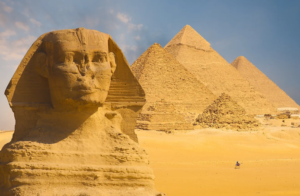
Luxor, often called the world’s largest open-air museum, holds the Karnak Temple complex, the Valley of the Kings, and the tomb of Tutankhamun.
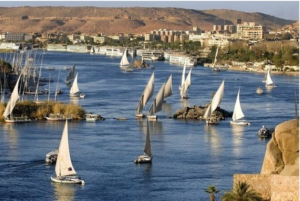
Other highlights include the Egyptian Museum (and the newer Grand Egyptian Museum) in Cairo, Abu Simbel in the south, and the Red Sea resort towns of Hurghada and Sharm El-Sheikh, known for diving and coral reefs. A Nile River cruise between Luxor and Aswan is one of the most popular ways to see several sites at once.
Rites of Passage
Family and faith shape most of Egypt’s major life milestones. A child’s birth is celebrated with a sebou, a joyful seventh-day naming ceremony involving candles, songs, and gifts. Circumcision for boys is traditionally carried out in early childhood, often marked with a small family gathering.
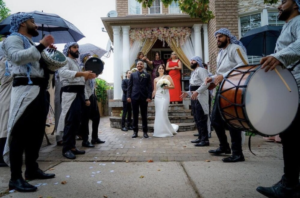
Marriage is the most elaborate rite of passage. It typically involves an engagement (khitba), a religious or civil contract (katb el-kitab), and finally a large wedding celebration — often with a zaffa, a lively musical procession that welcomes the couple. Death and mourning follow religious customs, usually Islamic or Coptic Christian, with burial happening quickly and a mourning period observed by close family.
Family Structure
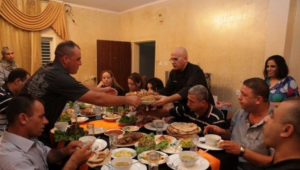
Egyptian society is built around the extended family. It’s common for grandparents, parents, and children to live nearby — sometimes under one roof — and decisions are frequently made collectively rather than individually. Families tend to be patriarchal, with the eldest male often seen as the head of the household, though mothers hold significant authority in day-to-day family life. Respect for elders is a core value, and family loyalty generally takes priority over individual preference. Visitors invited into an Egyptian home should expect warm hospitality — and probably more food than they can finish.
How Greetings Are Done
Egyptians are warm, expressive greeters. A handshake is standard, though between men it may be firmer and longer than Westerners are used to. Close friends and family often greet with cheek kisses — usually two or three, and typically between people of the same gender.
The common verbal greeting is “As-salamu alaikum” (“peace be upon you”), answered with “Wa alaikum as-salam.” A simpler “Ahlan” or “Ahlan wa sahlan” (welcome) works well for casual encounters. One important note: many Egyptian men will not initiate a handshake with a woman, and it’s polite to wait and see whether a woman offers her hand first — a nod or hand-on-heart gesture is a respectful alternative.
Dress Code
Egypt is a majority Muslim country with conservative social norms, especially outside major tourist resorts, so modest dress is appreciated and often expected.
For women: loose-fitting clothing that covers the shoulders and knees is recommended for visiting mosques, markets, and non-resort towns. A lightweight scarf is useful, since headscarves are required when entering mosques. Swimwear is fine at hotel pools and Red Sea beach resorts.
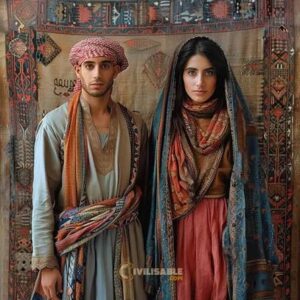
For men: shorts and sleeveless shirts are generally fine in tourist and coastal areas, but long trousers and collared shirts are better for cities, religious sites, and rural areas. Traditional dress, the galabeya — a loose, ankle-length robe — is still worn by many Egyptian men, particularly in rural areas and older neighborhoods, and makes for a popular (and comfortable) souvenir
A Few More Things Worth Knowing
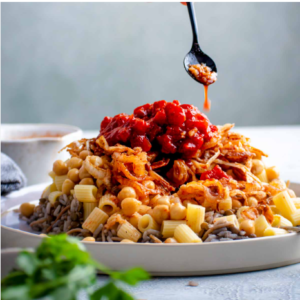
Food: Egypt’s national dish is koshari — a hearty, satisfying mix of rice, lentils, pasta, and chickpeas topped with spiced tomato sauce and crispy fried onions. Other must-tries include ful medames (stewed fava beans, a breakfast staple), molokhia (a garlicky green stew), and ta’ameya (Egyptian-style falafel made from fava beans rather than chickpeas).
Tea and coffee culture runs deep — expect to be offered sweet black tea (shai) or Egyptian coffee almost anywhere you go, and it’s polite to accept.
Bargaining is expected in markets (souks) and with unmetered taxis, though not in shops with fixed price tags.
Friday is the main day of rest, similar to how Sunday functions in many Western countries, since it’s the Muslim holy day — many businesses close or shorten their hours.
Tipping (baksheesh) is deeply embedded in daily life, from restaurant staff to museum attendants who might offer to show you “something extra.”
Egypt rewards travelers who arrive with curiosity and respect for local customs — the warmth people show in return tends to be the thing visitors remember as much as the monuments themselves.